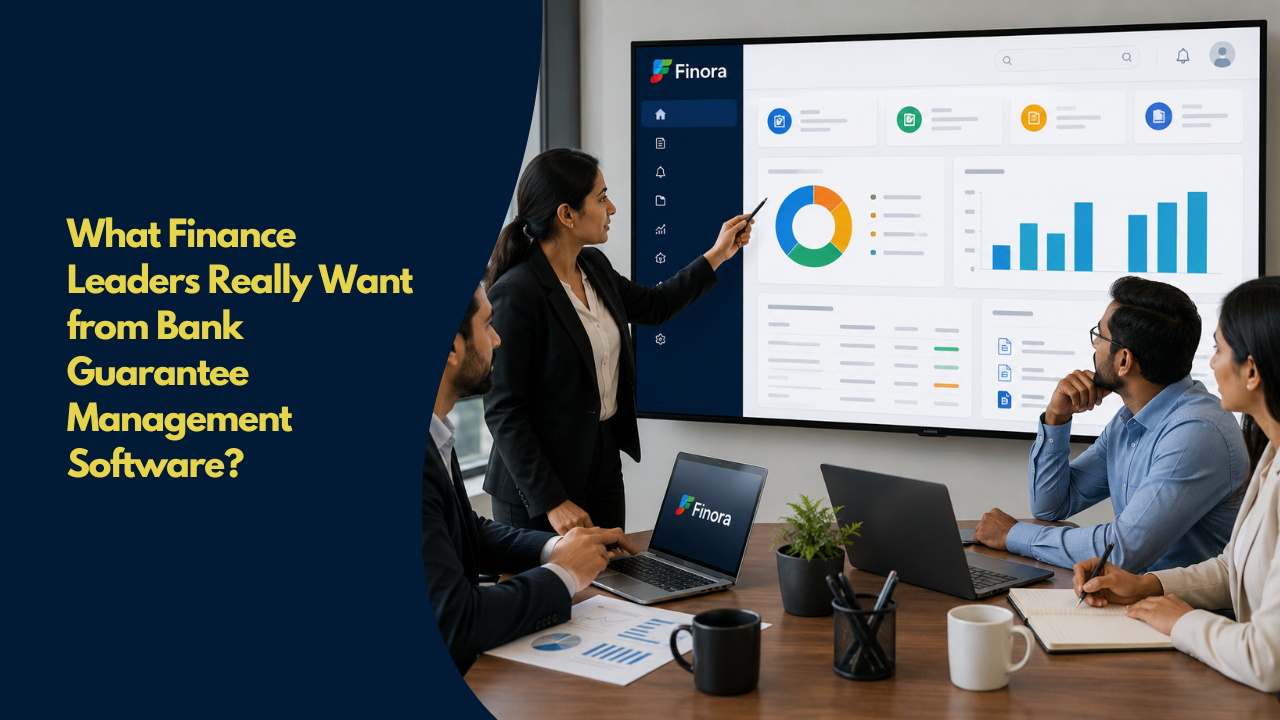
As businesses grow, the range of financial instruments they manage — bank guarantees, letters of credit, fixed deposits, loans, insurance policies, and agreements — grows more complex right alongside them. Many organisations still lean on spreadsheets and manual follow-ups to stay on top of it all, but today’s business environment calls for far greater visibility, accuracy, and control. The market isn’t looking for another tracking tool anymore; it wants an intelligent financial management platform.
That reliance on spreadsheets works fine — until a guarantee expires without anyone noticing. That single oversight can cost lakhs and damage a business relationship overnight. It’s why more finance teams are moving away from manual tracking and adopting purpose-built Bank Guarantee Management Software instead.
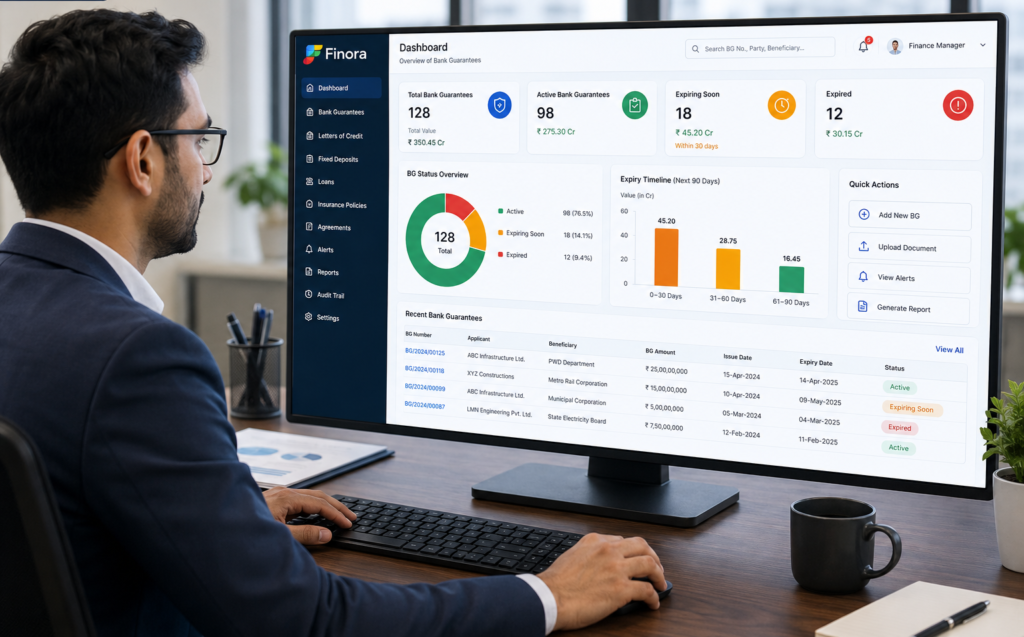
Platforms like Finora take this further, functioning as complete Financial Instrument Management Software that covers guarantees, LCs, deposits, loans, insurance, and agreements from a single dashboard — with automation and real-time reporting built in, rather than bolted on as an afterthought.
What finance managers actually want?
Talk to enough CFOs and finance controllers, and the same expectations come up repeatedly:
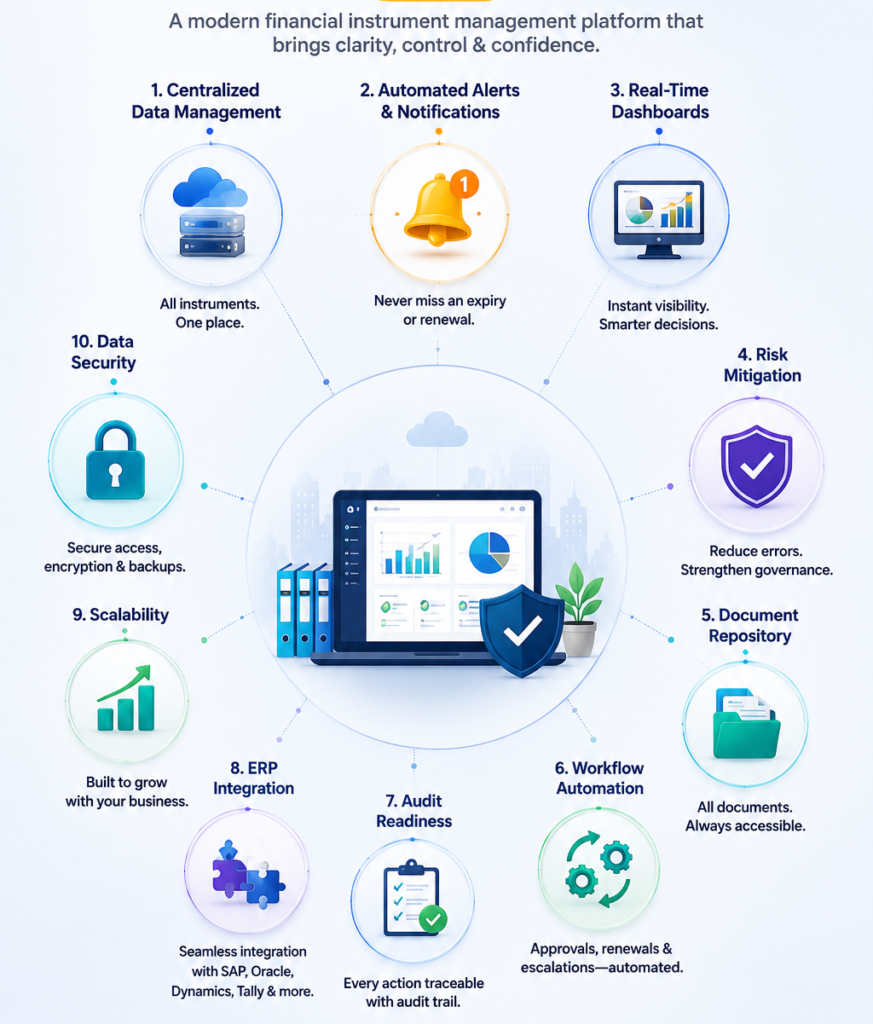
- Centralised data. No more digging through five different spreadsheets or forwarding email chains to figure out which guarantee is with which bank. Everything sits in one system that the whole finance team can trust.
- Automated alerts. Renewal and expiry dates get flagged well ahead of time, on their own. Nobody has to remember to check a calendar or a colleague’s Excel sheet before it’s too late.
- Real-time dashboards. A finance head shouldn’t have to wait for a monthly report to know total exposure. Live dashboards show liabilities, bank-wise breakdowns, and what needs attention this week.
- Risk mitigation. Fewer manual steps mean fewer chances for someone to enter a wrong figure or miss a clause. That translates directly into stronger governance around every transaction.
- Document repository. Every BG, LC, insurance policy, and signed agreement lives in one searchable place. No more calling three people to find where a document was last saved.
- Workflow automation. Approvals, renewals, and escalations move forward on their own once triggered, instead of sitting in someone’s inbox waiting to be actioned.
- Audit readiness. Every action leaves a traceable record. When auditors ask for history, the answer isn’t “let us check the email thread” — it’s already there.
- ERP integration. Finance teams don’t want a system that works in isolation. They expect it to sync cleanly with SAP, Oracle, Microsoft Dynamics, or Tally.
- Scalability and security. As the business adds more instruments and more users, the system should absorb that growth without demanding a bigger team — while keeping data locked down through role-based access and encryption.
Why Finora is different from managing on an ERP?
It’s a fair question — most organisations already run an ERP, so why add another platform? The honest answer is that ERPs are built for general ledger accounting and enterprise-wide consolidation, not instrument-specific tracking. Bank guarantees and LCs have their own lifecycle logic — issuance terms, bank-specific formats, renewal cycles — that most ERPs treat as an afterthought. In practice, finance teams end up maintaining a parallel spreadsheet anyway.
Finora is built the other way around. Instrument lifecycle management is the core function, not a bolt-on module, and it’s designed to integrate with the ERP systems businesses already run rather than replace them. The result: purpose-built tracking alongside existing accounting infrastructure, fewer reconciliations, and fewer missed renewals.
Spreadsheets and manual reminders got finance teams this far, but as instrument volumes grow, the cost of a single missed renewal keeps climbing. The real question isn’t whether financial instrument management software is worth adopting — it’s whether current processes can survive the next few years of growth without one.
Frequently Asked Questions
What is Bank Guarantee Management Software used for?
It centralises tracking of bank guarantees — issuance, renewal dates, and expiry alerts — so nothing lapses unnoticed, unlike manual spreadsheet tracking.
What makes Finora a Financial Instrument Management Software rather than just a tracker?
Finora combines centralised data, automated alerts, real-time dashboards, and audit trails across guarantees, LCs, deposits, loans, insurance, and agreements — not just one instrument type.
Can this software integrate with our existing ERP?
Yes. Finora is designed to work alongside SAP, Oracle, Microsoft Dynamics, and Tally rather than replacing them.
Is Finora suitable for growing businesses?
Yes — it’s built to scale, so adding instruments and users doesn’t mean adding proportional manual effort.
How secure is data stored on Finora?
Finora uses role-based access controls, encryption, and secure backups to keep sensitive financial data restricted to authorised users only.