
Frequently Asked Questions
Have questions about SIMPROO LAMS? Explore our frequently asked questions to learn how the platform simplifies land acquisition, improves project visibility, and supports efficient land management.
A Land Acquisition Management System, or LAMS, is what organizations use to keep land acquisition from turning into a paperwork nightmare. Survey records, ownership details, compensation figures, approval status, rehabilitation activities — instead of these living across separate spreadsheets, folders, and physical files, they all sit in one system that anyone on the project can refer back to.
Any land acquisition project pulls in multiple teams, layers of approval, and a stack of documentation that only grows over time. SIMPROO LAMS puts all of that on one platform, so tracking progress doesn’t mean chasing five people for updates. Pending work stays visible, and records get updated as the project moves rather than in a scramble before a review.
It’s built for organizations that deal with land acquisition regularly, not as a one-off. That covers infrastructure and EPC companies, mining businesses, renewable energy developers, industrial project owners, and the public sector and government bodies handling land acquisition and the record-keeping that comes with it.
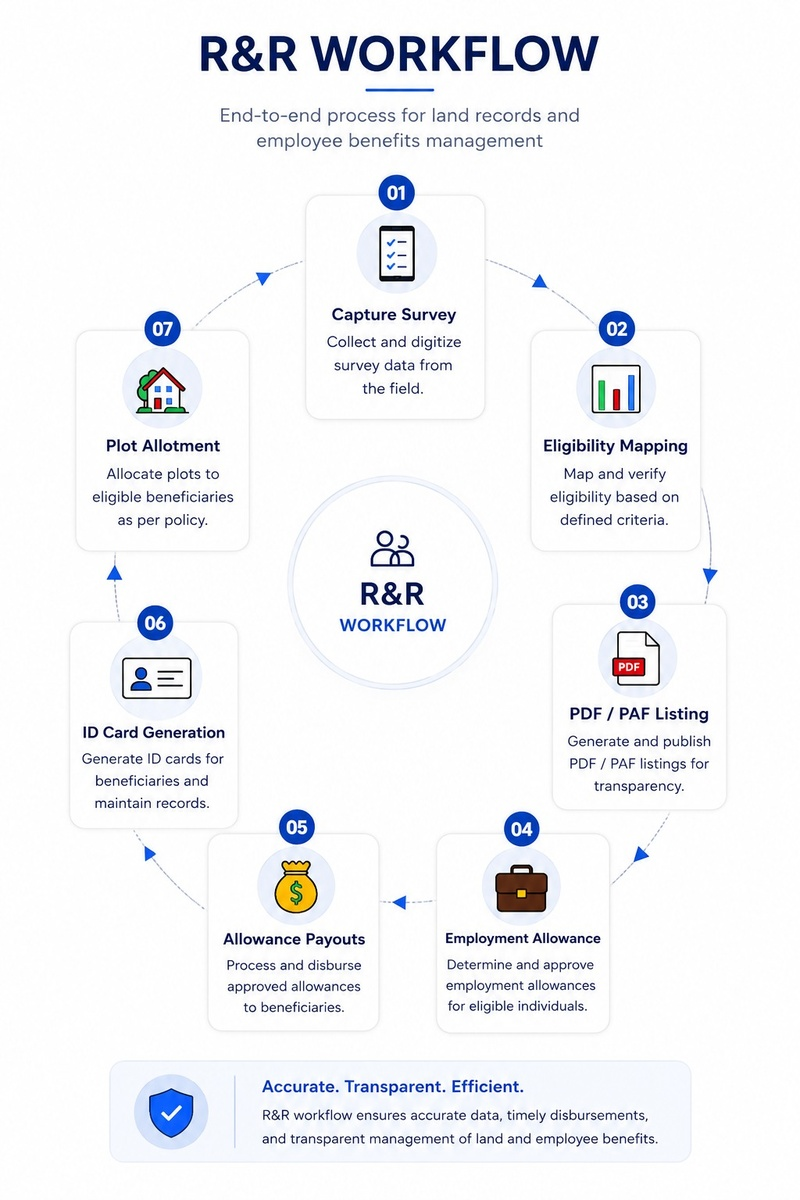
Yes — R&R isn’t treated as a bolt-on. Beneficiary information, assistance disbursed, plot allocation, employment support, payment processing, and the supporting documents for each of these stay within the same system, so nothing needs to be reconstructed later from scattered files.
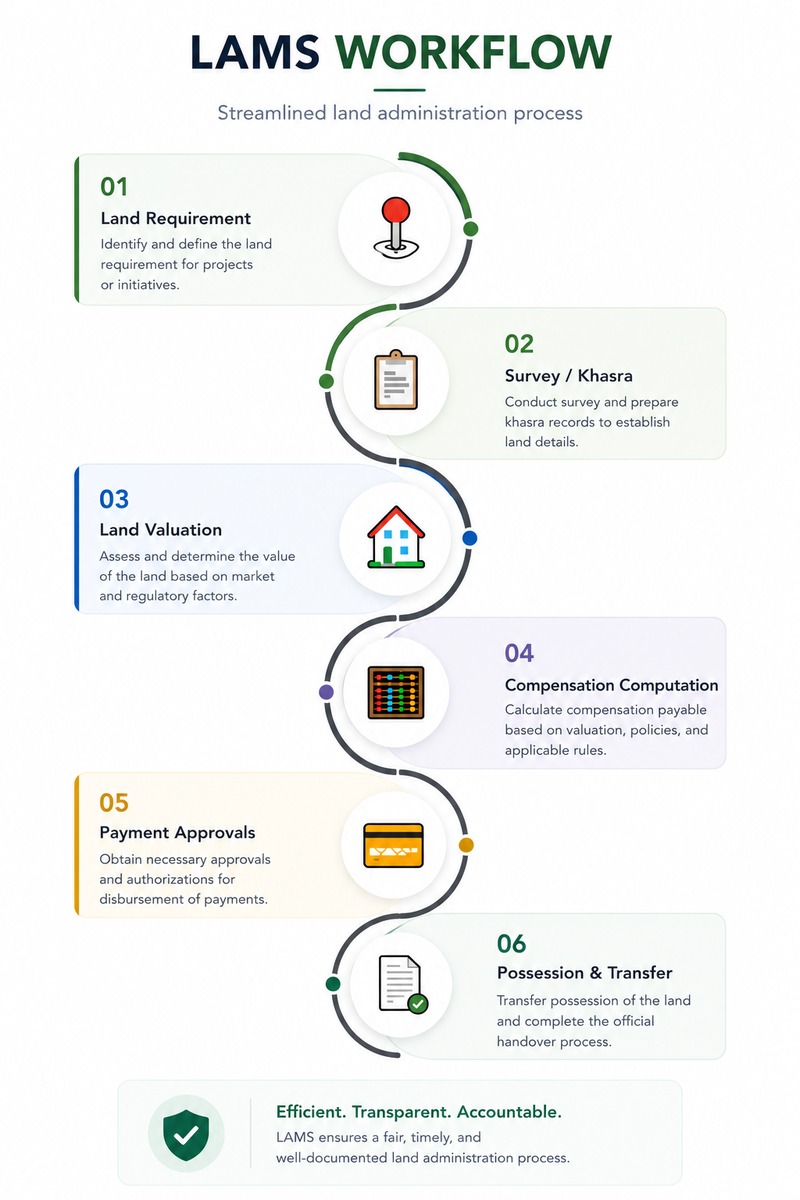
It follows the project from the first survey right through to final acquisition. Teams can check current status, see what’s been completed, spot approvals that are still pending, and track compensation and rehabilitation progress without digging through separate registers to piece the picture together.
Every organization follows its own procedures for land acquisition. SIMPROO LAMS can be configured to match your existing workflows, approval structure, reporting requirements, and compliance needs, allowing the software to fit your business instead of forcing you to change your processes.
Yes. It connects with ERP, GIS, finance, and document management systems, so departments aren’t re-entering the same data twice and everyone is working off information that’s actually current.